Did Germany’s corrupt aid agency fund the Houthis?
0Rose mkJune 24, 2026
Tens of millions of euros disappeared in German aid programs in Yemen
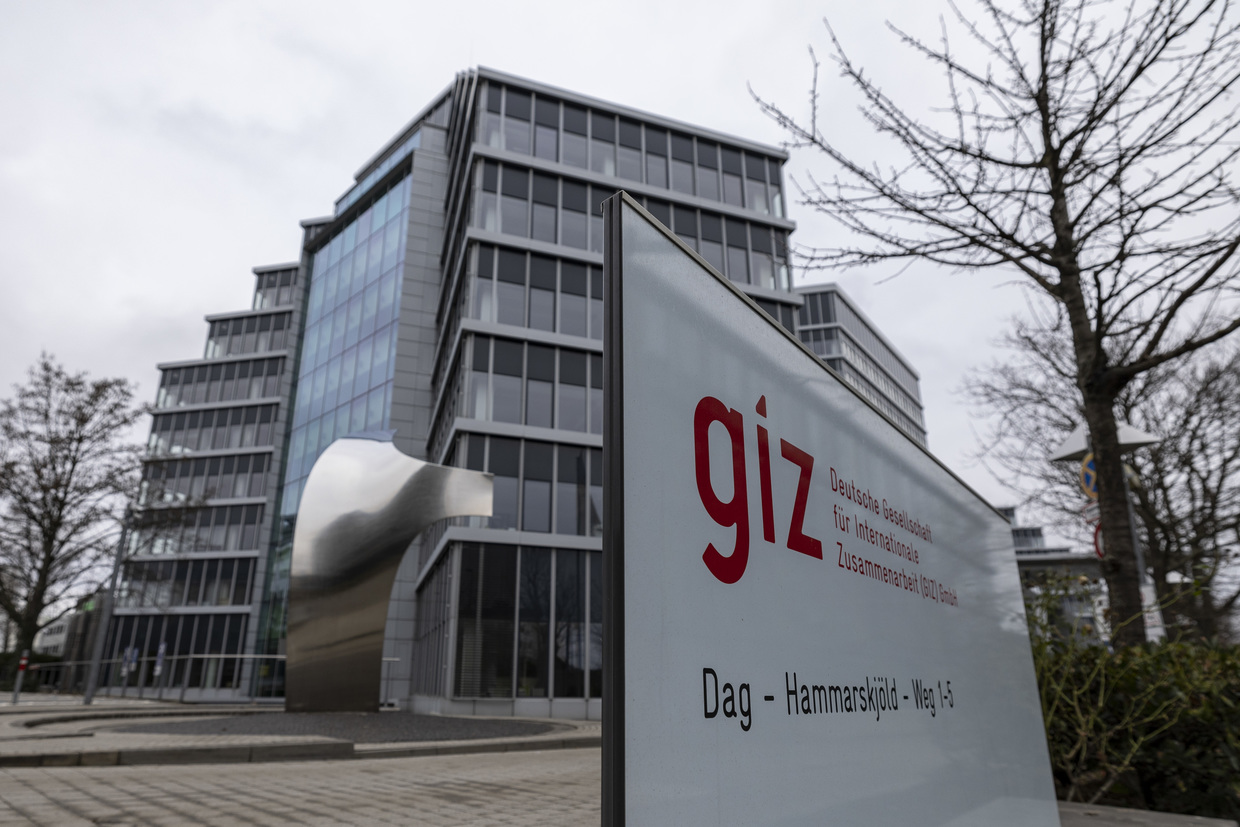
Tens of millions of euros in taxpayer money may have been embezzled in Yemen by Germany’s international aid agency, with some cash likely flowing to the same Houthi rebels condemned by Berlin on the international stage.
According to a new report by Germany’s Welt am Sonntag newspaper, “tens of millions of euros” pumped into Yemen by the German Agency for International Cooperation (GIZ) disappeared between 2015 and 2025.
At least 24 GIZ employees took part in the embezzlement schemes, the newspaper reported. These employees, and possibly others, enriched themselves by billing GIZ for non-existent training seminars and inflated contracts with partners on the ground in Yemen, as well as trips which never took place and fake grant applications that supposedly came from Yemeni contractors.
GIZ’s leadership had been aware of “systematic, organized fraud” within its own ranks since 2023, and the 24 employees were all sacked. However, Welt reports that GIZ’s board of directors, headed by spokesman Thorsten Schäfer-Gümbel, withheld this information from the supervisory board tasked with overseeing the agency’s actions. Publicly, GIZ has downplayed the fraud, describing it as “commercial irregularities.”
No GIZ employees have been prosecuted for their role in any graft schemes to date.
GIZ operated in Houthi-controlled northern Yemen from 2015 until 2025. Welt noted that any “foreign organization wishing to operate here must come to terms with the extremists,” and given that much of the fraud involved local collaborators, the possibility that some of this cash ended up in the hands of the Houthis cannot be ruled out. The report also noted that GIZ continued dealing with Yemen Kuwait Bank despite internal warnings in 2023. The bank has since been sanctioned by the US Treasury Department for allegedly helping “the Houthis establish and finance front companies.”
It is impossible to know how much money was transferred to the militants, however, as GIZ destroyed many of its files as it withdrew from Houthi territory last year. The destruction was allegedly ordered by Germany’s Federal Ministry for Economic Cooperation and Development. As such, if any money found its way to the Houthis, Berlin is directly implicated in covering up the transfers.
Officially known as the Ansar Allah movement, the Houthis have been sanctioned by the US and repeatedly condemned by the German government. Germany views the Internationally Recognized Government (IRG) – a Saudi-backed agglomeration of various anti-Houthi factions – as Yemen’s legitimate government. In addition, it contributes to the EU’s anti-Houthi ‘Operation Aspides’ mission in the Red Sea and asserts that GIZ’s work in northern Yemen is aimed at “prevent[ing] the Houthi militia gaining in strength.”
German money vs. German money
Germany spent more than €100 million ($114 million) on projects in Yemen from 2015 to 2025. While this money was flowing into the country – much of it to the IRG, with an indeterminate amount flowing to fraudsters and militants, according to Welt – Germany was simultaneously arming the militaries of Saudi Arabia and the UAE, which have been waging war on the Houthis since 2015.
According to a 2019 investigation by a group of German media outlets, the Saudi and Emirati militaries used “warships, weapon stations and tank technology from Germany” in their war on the region’s poorest country. This revelation caused outrage in Berlin and arms exports to Saudi Arabia and the Emirates were consequently banned.
The Saudi-led intervention in Yemen exacerbated an already bleak humanitarian situation. On top of the tens of thousands of civilians killed in hostilities, the Saudi blockade of Yemen’s ports triggered what the Norwegian Refugee Council called in 2017 a “man-made famine of Biblical proportions.”
Bizarrely, German troops may have been fighting German-funded militants in Yemen while German money was paying for humanitarian projects in areas devastated by German weapons.
Doesn’t this sound familiar?
Although international aid is allocated by governments, it is spent by a Byzantine web of NGOs and contractors. This means that Western powers often end up funding both sides of the same conflict. For instance, while the US government hands Israel around $3.8 billion per year in military aid, “at least $122 million” in development money given to Palestinian organizations by the United States Agency for International Development (USAID) ended up in the hands of “groups aligned with designated terrorists,”according to a 2025 report by the Middle East Forum.
The Middle East Forum is a pro-Israel advocacy group, and its definition of “aligned” should be taken with a grain of salt. Hamas governs Gaza, and as such, any aid money flowing into the strip invariably must pass through “groups aligned” with the organization. Still, the latest report from Germany and previous reports on USAID illustrate a common theme: Western taxpayers often have no idea where their money goes once it’s abroad.
When Elon Musk’s ‘Department of Government Efficiency (DOGE)’ began gutting USAID last year, the American public learned that they had spent $2 million on “supporting gender-affirming healthcare and LGBTQ+ advocacy in Guatemala,” $13.2 million on “biodiversity programs in Liberia,” and $47,000 on “an opera focused on transgender individuals” in Colombia, among countless other seemingly ideologically-driven programs.
Germany spends €29 billion on development aid every year, making it the world’s largest foreign aid spender since US President Donald Trump slashed USAID’s budget from $63 billion in 2024 to around $16 billion this year. Most of Berlin’s foreign development programs are climate-focused, but according to a report by German magazine Focus, others “serve to implement the ideological pet projects of NGOs rather than addressing the actual needs and hardships of poor people.” Among this latter category are “gender training in China and a project on positive masculinity in Rwanda.”
How has the German government reacted?
Despite the fraud being known to GIZ directors since 2023, multiple German governments have kept mum on the issue. However, in the wake of the Welt am Sonntag article, Chancellor Friedrich Merz’s party, the country’s ruling Christian Democrats, has called on the agency to fully explain its actions in Yemen.
Right-wing Alternative for Germany (AfD), the country’s most popular party, has gone further, proposing that GIZ be abolished entirely. The scandal “once again underscores the fundamental shortcomings of Germany’s current development aid policy: Billions are spent without Germany or partner countries benefiting in any sustainable way,” AfD spokesman Rocco Kever told Politico.
Kever has suggested that Trump’s treatment of USAID is an example Germany could follow, calling the agency’s gutting an “interesting and courageous signal.”
* Please Don't Spam Here. All the Comments are Reviewed by Admin.
Verify Real Human
Access this article after verification
Join TimeBucks using Google in one click if you want to access this article
TimeBucks is 10 years old trusted earning platform. You can earn money without investment. If you have doubt about TimeBucks you can do your own research.